
WELCOME BONUS 300%
UP TO €2000 + 100
FREE SPINS
UP TO €2000 + 100
FREE SPINS
Home → Games
Casino games at Knight Slots
Double Down: double bet, only one card
Liberal Vegas Strip Blackjack rules permit a Double Down on any two-card hand. This option allows the player to double the initial Ante wager in exchange for receiving exactly one final card. The action increases variance significantly compared to standard standing play.
The house edge for this rule set sits at 0.28 percent with an RTP of 99.72 percent. S17 combined with DAS and Resplit creates a mathematically favorable environment for doubling strategies. Players must execute the double immediately after the initial deal to maximize expected value.
This flexibility reduces the casino advantage by 0.48 percentage points relative to eight-deck games. The lower deck count minimizes card removal effects during the doubling phase. A late surrender option further trims the edge by an additional 0.08 percentage points.
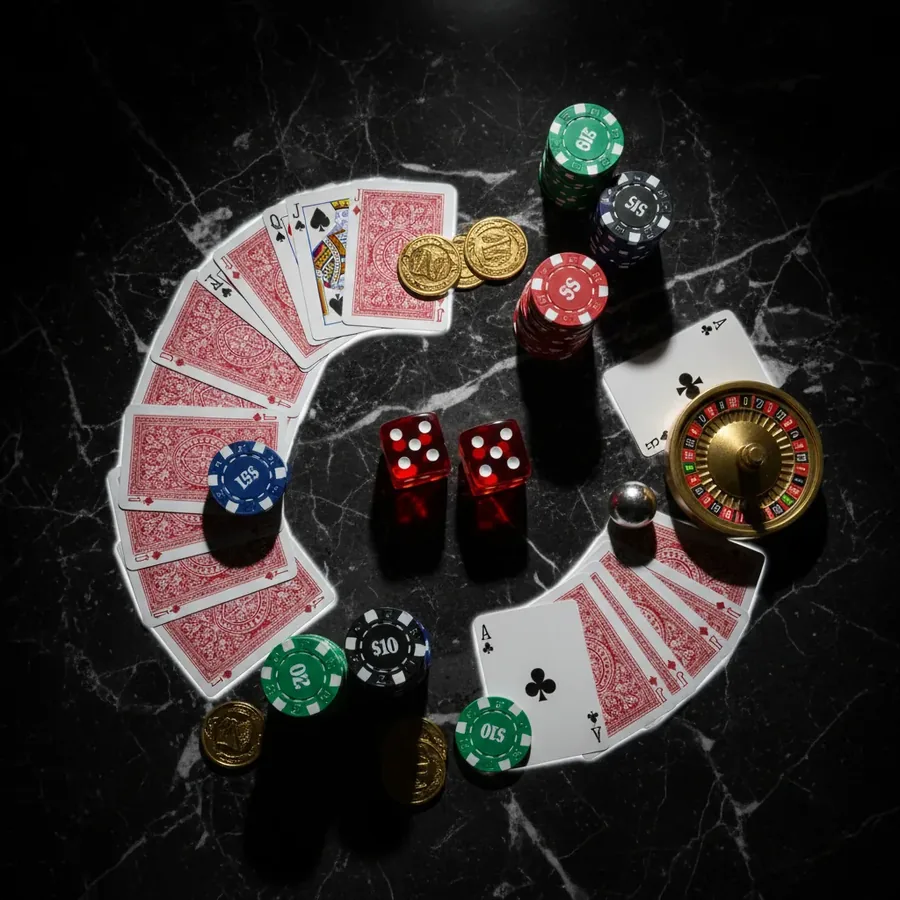
Blackjack flow: cards, decision, payout 3:2
A single-deck game offering 3:2 payouts delivers an RTP of 99.85 percent. The house edge measures just 0.15 percent when players follow optimal strategy. Natural Blackjacks pay 1.5 times the original stake instead of the reduced 6:5 ratio.
Six-deck variants typically force a 6:5 payout structure that adds 1.39 percentage points to the house edge. At a $10 stake, the difference between 3:2 and 6:5 amounts to a $3 loss per natural hand. The six-deck version yields an RTP of 98.15 percent with a 1.85 percent edge.
Early surrender rules can improve returns by up to 0.6 percentage points but remain rare in online casinos. Late surrender refunds 50 percent of the ante after checking for dealer blackjack. This mechanic protects players from busting hands against strong dealer upcards.
Player pays 1:1 without any commission
Baccarat Player bets settle at even money with no commission deducted from winnings. The eight-deck shoe generates an RTP of 98.76 percent and a 1.24 percent house edge. Standard deviations hover around 0.95 for this specific wager type.
Banker bets carry a 5 percent commission that lowers their effective return despite superior odds. The Banker edge measures 1.06 percent compared to the Player 1.24 percent margin. Choosing Player avoids the commission fee entirely while accepting a slightly higher long-term cost.
Side bets like Player Pair offer 11:1 payouts but suffer an 89.64 percent RTP. The house edge on these pair wagers jumps to 10.36 percent. Main game decisions should prioritize the zero-commission Player bet over high-edge side options.
Plein Pays 35:1, Cheval Pays 17:1
French Roulette inner bets use traditional French terminology for payout structures. Straight bets, known as Plein, pay 35:1 when the ball lands on the selected number. Split bets, called Cheval, award 17:1 for covering two adjacent numbers on the layout.
These payouts apply to European wheels featuring 37 numbered sectors. La Partage rules do not apply to these inner wagers, keeping the house edge at 2.70 percent. The absence of reduction rules means losses are collected immediately upon losing spins.
Column and Dozen bets pay 2:1 while covering twelve numbers each. Street bets yield 11:1 and Corner bets provide 8:1 for four-number combinations. Six Line bets cover six numbers and pay 5:1 at the table limit.
Split 17:1 and Corner 8:1 in Payout Comparison
Corner bets covering four adjacent numbers pay 8:1 in standard European roulette formats. Split bets spanning two neighboring numbers return 17:1 upon success. These interior wagers offer higher frequencies than straight numbers but lower multipliers.
The house edge remains constant at 2.70 percent regardless of the specific inner bet chosen. American Roulette Five Number Bets present a dangerous alternative with a 7.89 percent edge. The 6:1 payout on five sectors fails to compensate for the inflated casino advantage.
Sic Bo offers comparable risk profiles through its specialized betting markets. Single Number bets pay up to 3:1 depending on dice matches with a 7.87 percent edge. Specific Triple wagers jump to 180:1 but carry an 18.52 percent disadvantage for the player.
Game categories at a glance
| Category | Examples | Stakes From | Highlight |
|---|---|---|---|
| Slots | Big Bass Bonanza, Razor Shark, Extra Chilli Megaways | 0,10 EUR | thousands of titles |
| Table games | Roulette, Blackjack, Baccarat | 0,50 EUR | classic rules |
| Live casino | XXXtreme Lightning Roulette, Lightning Blackjack | 0,20 EUR | real dealers |
| Jackpot games | Mega Moolah, Divine Fortune, Age of the Gods | 0,20 EUR | progressive pools |
| Instant games | Aviator, Plinko, Mines | 0,10 EUR | fast rounds |
| Video poker | Jacks or Better, Deuces Wild | 0,25 EUR | strategy based |
Straight 35:1 Instead of 36:1: Where House Edge Originates
The Straight payout in French Roulette pays exactly 35 to 1, covering only one specific number on the wheel. This fixed multiplier applies to inner bets like Split or Corner wagers within the standard game structure. The mathematical expectation remains consistent regardless of bet size across these specific table categories.
This rate contrasts sharply with the theoretical 36 to 1 return required for a fair zero-sum game without house advantage. The discrepancy creates a permanent mathematical edge for the casino, quantified precisely at 2.70 percent for this variant. Players accept this cost for access to high-frequency betting opportunities on individual numbers.
Consequently, a successful straight bet yields a net profit equal to thirty-five times the original stake amount. This outcome stands in direct opposition to European wheels that offer La Partage rules reducing the effective edge. Without such protections, the long-term retention rate stays fixed at the stated two-point-seven percent margin.
37 vs. 38 Sectors: What the Double Zero Costs
American Roulette utilizes a wheel featuring thirty-eight distinct sectors, including both single zero and double zero pockets. This configuration introduces the Five Number Bet, which covers zero, double zero, one, two, and three simultaneously. Such broad coverage typically suggests value but actually represents the worst mathematical proposition available on the floor.
The presence of the extra sector inflates the house edge for the Five Number Bet to a staggering 7.89 percent. This figure significantly exceeds the standard 5.26 percent edge found on all other American roulette wagers. The additional green pocket mathematically guarantees higher long-term losses compared to any single-zero alternative.
In contrast, French Roulette employs a thirty-seven sector wheel, maintaining a much lower base edge of 2.70 percent. However, removing La Partage rules for inside bets eliminates player protection mechanisms present in other variants. This structural difference highlights how sector count directly influences potential profitability for regular table game participants.
The absence of En Prison or La Partage on French tables keeps the edge constant at 2.70 percent despite fewer pockets. Players seeking optimal odds must avoid the American wheel entirely due to its inherent mathematical disadvantage. The data confirms that sector reduction alone does not guarantee better returns without rule adjustments.
Read Statistics of Last 500 Rounds Correctly
Sic Bo offers Specific Triple bets paying 180 to 1, carrying a substantial house edge of 16.20 percent. This high payout correlates directly with the extreme difficulty of predicting three identical dice outcomes accurately. Statistical variance remains exceptionally high for players attempting to capitalize on these rare events over time.
Single Number bets provide a more balanced risk profile, paying between 1 to 1 and 3 to 1 depending on matches. The associated house edge drops to a manageable 7.87 percent, making it the best specialist wager available. This efficiency allows for longer play sessions compared to the volatile triple options offered by the studio.
Any Triple wagers pay 30 to 1 with a house edge of 13.89 percent, sitting between the extremes. Specific Double bets pay 10 to 1 but suffer from an 18.52 percent disadvantage, representing the worst option. Understanding these distinctions prevents misallocation of bankroll toward statistically inferior betting strategies.
Dozen 2:1: Twelve Numbers, One Third Coverage
Dozen bets in French Roulette cover twelve numbers per group, offering a 2 to 1 payout ratio upon success. These wagers fall under the inner category when La Partage rules are explicitly excluded from the game terms. The mathematical expectation remains stable at 2.70 percent regardless of which specific dozen is selected.
This coverage represents exactly one-third of the total thirty-seven numbers on the French roulette wheel layout. The consistency of the payout structure allows for predictable variance management compared to corner or street bets. Players utilizing this strategy face a steady erosion of funds at the established two-point-seven percent rate.
Comparing this to the Straight bet reveals significant differences in frequency versus magnitude of returns for each outcome. While straights pay thirty-five to one, dozens provide frequent small wins that sustain bankroll longevity. The choice between these options dictates whether a player pursues high volatility or steady engagement.
The exclusion of La Partage means losses on dozens are retained fully by the operator without partial refund. This rule change elevates the effective cost of play compared to variants offering half-loss protection. Analyzing these mechanics clarifies why certain table games attract different demographic segments based on risk tolerance.
Variance at the Table: 1:1 vs. 35:1
Baccarat Player bets pay 1 to 1 with no commission, resulting in a house edge of 1.24 percent. This low disadvantage stems from the natural probability distribution of drawing three cards under standard rules. The standard deviation for this outcome measures approximately 0.95, indicating moderate volatility relative to the stake size.
Blackjack Liberal Vegas Strip rules yield a superior house edge of 0.28 percent with a 3 to 2 payout. This variant requires favorable conditions like surrender options and resplitting to achieve such minimal casino advantage. The standard deviation increases to 1.15 due to the higher payout multiplier affecting win/loss amplitude.
Craps Pass Line bets also offer 1 to 1 payouts but carry a slightly higher edge of 1.41 percent. The standard deviation here reaches 1.00, reflecting the complex resolution mechanics involving point establishment phases. Comparing these figures demonstrates how similar payouts mask vastly different underlying mathematical structures across games.
Video Poker Deuces Wild presents a unique anomaly where optimal play generates a negative house edge of minus 0.76 percent. This positive expected value occurs only with perfect strategy execution on the full pay table version. Any deviation immediately pushes the return below break-even, highlighting the precision required for profitability.
6 Decks vs. 8 Decks in House Edge
The Blackjack Liberal Vegas Strip game uses eight decks and offers a Return to Player of 99.72 percent with a house edge of only 0.28 percent, which is the most favorable rule combination available including S17 and late surrender options.
In contrast, the single-deck Blackjack variant with classic rules provides an even lower house edge of 0.15 percent and a higher RTP of 99.85 percent because fewer decks reduce the casino's mathematical advantage significantly compared to multi-deck shoes.
This difference means that playing the six-deck version instead of the single-deck table results in a higher cost per hour, as the 0.13 percentage point increase in house edge accumulates over thousands of hands dealt during extended gaming sessions.
9/6 table: nine for Full House, six for Flush
The Video Poker Deuces Wild game features a full-pay table where a Full House pays nine coins and a Flush pays six coins, contributing to a remarkable Return to Player of 100.76 percent when optimal strategy is applied consistently.
This specific payout structure creates a negative house edge of minus 0.76 percent, making it the only mass-market game where skilled players can achieve a positive expected value on every bet placed at the maximum allowable wager limit.
Any deviation from the perfect strategy immediately reduces the theoretical return below one hundred percent, so players must memorize the exact discard hierarchy to maintain this mathematical advantage over the casino's random number generator system.
Before sitting down: check table bet limits
The Casino Hold'em Ante plus Call variant requires players to place an initial Ante bet followed by a Call bet equal to twice the Ante amount after seeing the flop, resulting in a total risk element of 0.82 percent per round.
Sic Bo Small and Big bets operate under Atlantic City rules where winning wagers pay 1:1, but triplets cause all such bets to lose, establishing a house edge of 2.78 percent which represents the best odds available in this dice game category.
Roulette American Five Number Bets cover sectors zero, double zero, one, two, and three while paying 6:1, yet they carry a steep house edge of 7.89 percent due to covering five outcomes out of thirty-eight total pockets on the wheel.
Bankroll for 200 Rounds at 1 EUR
Playing Craps Pass Line bets involves a house edge of 1.41 percent with a standard deviation of 1.00, meaning that betting one euro per roll for two hundred rounds exposes the bankroll to significant variance despite the relatively low long-term loss rate.
Baccarat Player bets offer slightly better odds with a house edge of 1.24 percent and a standard deviation of 0.95, allowing for more predictable bankroll management over two hundred rounds compared to the higher volatility found in other table games like roulette.
Blackjack Surrender rules improve the Return to Player by approximately 0.08 percentage points, reducing the effective house edge and thereby preserving more of the initial bankroll during two hundred hands played with basic strategy adherence throughout the session.
Push in Blackjack: the bet returns
In Craps Don't Pass bets, rolling a twelve results in a push where the original wager is returned without winning or losing, which slightly improves the overall Return to Player to 98.64 percent compared to the Pass Line outcome statistics.
Blackjack Surrender allows players to forfeit half their bet after the dealer checks for blackjack, effectively returning fifty percent of the stake rather than losing the entire amount, which mathematically enhances the game's Return to Player by roughly 0.08 percentage points.
Casino Hold'em Ante bets result in a push if the dealer holds a pair lower than four, ensuring the player keeps their initial stake intact rather than losing it, which helps mitigate losses during unfavorable community card distributions across multiple rounds.
Contact
Live - online chat
Banking









Providers












Knight Slots 2026